Stanford Magazine tells me the U.S. government wants to use technology to help people around the world circumvent political censorship. So why is that same government prosecuting Bradley Manning and trying to shut down WikiLeaks?
Thursday, July 22, 2010

Tuesday, July 20, 2010
Iran's Record, Part 2
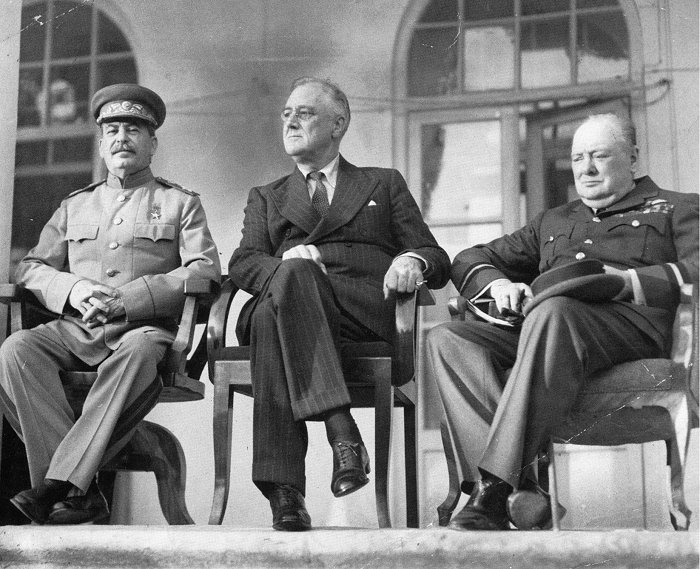
In Part 1 of this series, I discussed the 1941 invasion and occupation of neutral Iran by Great Britain and the Soviet Union, aided and abetted by the "neutral" United States. Like all Allied war crimes, this one went unpunished. Do as we say, not as we do.
The United States, of course, dropped all pretense at neutrality following the "unprovoked" Japanese attack at Pearl Harbor. The Roosevelt Administration had tried, unsuccessfully, to provoke an attack by Hitler. When the United States declared war on Japan, however, Hitler honored his treaty obligations with the Japanese and declared war on the United States, thus sealing his fate.
In 1943, at the Tehran Conference, Churchill, Stalin, and Roosevelt pledged their commitment to Iranian sovereignty:
"The Three Governments realize that the war has caused special economic difficulties for Iran, and they are agreed that they will continue to make available to the Government of Iran such economic assistance as may be possible, having regard to the heavy demands made upon them by their world-wide military operations, and to the world-wide shortage of transport, raw materials, and supplies for civilian consumption." (Declaration of the Three Powers Regarding Iran—December 1, 1943)
The three belligerents pledged to leave Iran within six months of the cessation of hostilities. The Soviets spent the three years of occupation fomenting separatist movements in Azerbaijan and Kurdistan, and refused to honor the withdrawal deadline until they were granted oil concessions. Following the Soviet withdrawal, the Iranian government suppressed the separatist movements and cancelled the oil concessions.
The British, however, retained oil concessions held by a firm much in the news these days. The Anglo-Iranian Oil Company (AIOC) will be familiar to modern readers as British Petroleum (BP). Yes, the very same BP that presently is spewing oil all over the Gulf of Mexico. The Anglo-Iranian Oil Company, and the sincerity of Anglo-American guarantees of Iranian sovereignty, are the subjects of the next two installments.
In 1901, William Knox D'Arcy, an English millionaire, negotiated an oil concession with the Shah Mozzafar al-Din Shah Qajar of Persia. He assumed exclusive rights to prospect for oil for 60 years in a vast tract of territory including most of Iran. In exchange the Shah received £20,000, an equal amount in shares of D'Arcy's company, and a promise of 16% of future profits.
The venture proved unsuccessful for several years, and D'arcy was forced to sell most of his rights to a Glasgow-based syndicate, the Burmah Oil Company. By 1908, the firm was on the verge of dismantling operations but, on In May 26 of that year, they discovered a large field of oil at Masjed Soleiman. Burmah Oil Company created the Anglo-Persian Oil Company (APOC) and publicly issued shares in the new company.
In 1913, the company acquired a new customer: Winston Churchill, who was then First Lord of the Admiralty. At Churchill's suggestion, and in exchange for secure oil supplies for its ships, the British government injected new capital into the company and, in doing so, acquired a controlling interest in APOC. APOC, in turn, acquired a 50% interest in the Turkish Petroleum Company (TPC), an anti-competitive trust formed by some of the world's biggest oil companies to obtain concessions in the Ottoman Empire and outflank their newer, more entrepreneurial competitors.
TPC's operations were interrupted by the First World War. After the war, the company reorganized and, in 1927, struck a large field of oil near Kirkuk, Iraq. The company was renamed the Iraq Petroleum Company (IPC).
In 1933, following four years of protracted negotiations In Tehran, London, Paris, Lausanne, and The Hague, Iran signed a new concession with APOC. The terms of the new agreement provided for a new 60-year concession. The Agreement reduced the area under APOC control to 100,000 square miles, required annual payments in lieu of Iranian income tax, as well as guaranteeing a minimum annual payment of £750,000 to the Iranian government. These provisions, while appearing favorable, are widely agreed to have represented a squandered opportunity for the Iranian government. The agreement extended the life of the D'Arcy concession by an additional 32 years, negligently allowed APOC to select the best 100,000 square miles, the minimum guaranteed royalty was far too modest, and in a fit of carelessness the company's operations were exempted from import or customs duties. Finally, Iran surrendered its right to annul the agreement, and settled on a complex and tediously elaborate arbitration process to settle any disagreements that would arise.
In 1935, APOC was renamed the Anglo-Iranian Oil Company (AIOC).
In 1949, Britain offered Iran a "Supplemental Oil Agreement" which guaranteed royalty payments would not drop below £4 million, reduced the area in which it would be allowed to drill, and promised more Iranians would be trained for administrative positions." The agreement, however, gave Iran no "greater voice in company's management" or right to audit the company books. When the Iranian Prime Minister, Mohammad Sa'ed, tried to dicker with AIOC head Sir William Fraser, Fraser "dismissed him" and flew back to UK.
By 1950, resentment against the low share of profits given Iran had been percolating for several decades. These resentments were exacerbated by AIOC's longstanding practice off cutting off royalty advances when its demands weren't met; poor working conditions for Iranians employed by AIOC; the company's refusal to honor its promise, under a 1933 agreement with the Shah, to improve working conditions, train Iranians for administrative positions, and build schools, roads and hospitals; the death, destruction and national humiliation wrought by the Anglo-Soviet invasion and occupation of neutral Iran during World War II; and the dependency on oil revenues for capital and modernization projects. Nationalization became a popular idea among the majority of Iranians. Nationalization sentiment was further inflamed when Iranians learned that both Standard Oil of New Jersey and the American-owned Arabian American Oil Company (ARAMCO) had agreed to more equitable terms with Venezuela and Saudi Arabia, respectively. The UK Foreign Office rejected the idea of any similar agreement for AIOC.
Among the organized forces calling for nationalization, the two most powerful were the outlawed Tudeh (Communist) Party and the Jebhe Melli (National Front of Iran). Mohammed Mossadegh, a Western-educated teacher, lawyer, and member of the Majlis (Parliament) was one of the founders of the National Front and, in 1950, was the party's leader.
On June 26, 1950, General Haj Ali Razmara became Prime Minister of Iran. Razmara's appointment was urged on the Shah by the British Foreign Office and AIOC, as they believed he was the only man capable of backing down Mossadegh and the National Front and getting the Supplemental Agreement ratified. Razmara was an intelligent and capable administrator and made a number of positive changes in the Iranian government and economy. But he also made many enemies, notably by streamlining the bloated and patronage-ridden civil service and devolving government to the local level, and by his opposition to nationalization. Razmara did ask for modifications to the Supplemental Agreement: payment of some royalties in advance; allowing Iranians into managerial positions; and allowing Iranian auditors to review the company's books. AIOC refused.
On March 7, 1951, while entering a mosque for a memorial service, Razmara was assassinated by a gunman in the crowd. Khalil Tahmasebi, a 26 year-old carpenter and member of the fanatical Islamic organization, Fadayan-e Islam, was arrested on the spot (Tahmasebi was pardoned by a vote of the Majlis and released from prison in November, 1952).
On March 15, 1951, the Majlis voted to nationalize Iran's oil fields. On March 20, the Majlis voted to expropriate the AIOC refinery at Abadan, then the world's largest. 25% of oil revenues were to be set aside to pay AIOC's claims for compensation.
Tudeh, the National Front, and Fadayan-e Islam had been busy since the assassination of Ali Razmara. Demonstrations, riots and assassinations continued. The discovery of an assassination plot against the Shah and his family led to the arrests of several Fadayan members, including its leader, Navab Safavi. The appointment of Hussein Ala as Prime Minister only served to increase the unrest, and he resigned after less than two months in office. The Shah thought to replace Ala with former Prime Minister Sayyid Ziya al-Din Tabatabai, but on April 28, the Majlis, led by the National Front, elected Mohammed Mossadegh Prime Minister.
The young Shah, seeing the writing on the wall all too clearly, appointed Mossadegh to the Premiership. That decision, and the Anglo-American reaction to it, would prove fateful to Iran and the West right up to the present day. Stay tuned for Part 3.
Monday, July 19, 2010
Iran's Record, Part 1
The latest bugaboo, as the Establishment tries to prep us for a war of aggression against Iran, is the absurd claim that Osama bin Laden is hiding out in Tehran. Here, Iranian president Mahmoud Ahmadinejad treats both that claim and Establishment mouthpiece George Stephanopolous with the derision they so richly deserve:
The opening of the current UN nuclear conference saw some unintentional hilarity from Hillary. According to Madame Secretary of State, "Iran will do whatever it can to divert attention from its own record and to attempt to evade accountability." She called Ahmadinejad's comments at the beginning of the conference, "the same tired, false and sometimes wild accusations" against the United States and other countries.
We'll examine Mrs. Clinton's accusations separately. "Bad record" and "lack of accountability" pretty well characterize the US government's relations with Iran:

The opening of the current UN nuclear conference saw some unintentional hilarity from Hillary. According to Madame Secretary of State, "Iran will do whatever it can to divert attention from its own record and to attempt to evade accountability." She called Ahmadinejad's comments at the beginning of the conference, "the same tired, false and sometimes wild accusations" against the United States and other countries.
We'll examine Mrs. Clinton's accusations separately. "Bad record" and "lack of accountability" pretty well characterize the US government's relations with Iran:
- Operation Countenance, 1941: Seeking control of Iran's oil and an overland route to deliver Lend-Lease supplies to the Soviet Union, Great Britain and the Soviet Union invade and occupy neutral Iran. Reza Shah Pahlavi, citing the Atlantic Charter, appeals to American president Franklin Delano Roosevelt to pressure the Brits and Soviets to back off. FDR, busy lying to the American people about what he's up to in Europe and the Pacific, tells Reza Shah to go fly a kite. Besides, Reza Shah already has "the statements to the Iranian Government by the British and Soviet Governments that they have no designs on the independence or territorial integrity of Iran," so what's he bitching about? Iranian resistance to the invasion is swiftly swept aside. 800 Iranian soldiers, sailors and airmen are killed, including the Imperial Navy commander Admiral Bayandor, along with approximately 200 civilians. Reza Shah is arrested and sent into exile in South Africa and his son, Mohammed Reza Shah Pahlavi, is installed as puppet monarch. The Soviets foment trouble in the northern parts of the country and refuse to comply with the withdrawal deadline (six months after the cessation of hostilities) agreed to at the Tehran Conference. Three years of occupation leaves the Iranian economy and middle class financially devastated.
Sunday, July 18, 2010
Friday, April 30, 2010
After the Fall

Orient Commercial Bank, Khanh Hoi Branch. Ho Chi Minh City (Saigon), Vietnam.
35 years after the fall of Saigon (30 April 1975), the Vietnamese, left to their own devices, are doing pretty well for themselves. And somehow, the dreaded Viet Cong conquest of the United States never materialized. There's a lesson here, if we care to learn it.
Monday, March 22, 2010
Socialized Medicine Horror Stories
Coming soon to an American hospital or doctor’s office near you.
(HT: Thomas DiLorenzo)
(HT: Thomas DiLorenzo)
Sunday, March 21, 2010
Obamanomics
OK, I think I have this whole Health Reform thing figured out now.
- Congress passes massive new entitlement program;
- Program is funded by increased taxes on interest and dividends;
- Reduced incentive to save and invest leads to reduced capital formation;
- Less capital leads to higher unemployment;
- Lather, rinse, repeat, as increase in entitlement mentality and decrease in employment opportunities combine to drive more people into dependency on Big Government.
- Under Obamanable economics, no one will need a job since the government will provide everything. The American economy will enter an era of unprecedented prosperity;
- Money to fund the new Jobless Economy will come from China. As Paul Krugman recently explained, the Chinese will keep lending to the US, ad infinitum, even as the US Government launches a currency war against them.
Saturday, March 13, 2010
Media Blackout on Agent Orange
Coverage ignores effects on Vietnamese victims

War Remnants Museum, Ho Chi Minh City, Vietnam
Why so little interest in a genuine, man-made ecological disaster, as opposed to the global warming fraud?
War Remnants Museum, Ho Chi Minh City, Vietnam
Why so little interest in a genuine, man-made ecological disaster, as opposed to the global warming fraud?
Wednesday, March 10, 2010
SJMN: You have to be crazy not to love the government
The San Jose Mercury News thinks John Patrick Bedell's 2007 arrest for, "approaching a 6-year-old and his father at Mountain View's Bubb Elementary School and threatening them with a 6-foot-long stick when they wouldn't let him join their soccer practice" was a sign the guy was a bit off. For definitive proof, though, the SJMN reporters cite, "his rants against the government on YouTube, and his Internet postings, blasting marijuana laws and speaking out on the death of a Marine colonel and 'the September 11th demolitions.'"
Well, what do you expect from the Establishment organ that willingly destroyed its own reporter after he rocked that same Establishment by blowing the lid off the CIA-Contra crack cocaine connection?
Well, what do you expect from the Establishment organ that willingly destroyed its own reporter after he rocked that same Establishment by blowing the lid off the CIA-Contra crack cocaine connection?
Calif. analyst sees job losses under climate law
OK, I'll bite: what constitutes "modest job losses" in a state with double-digit unemployment?
Thursday, December 17, 2009
The Economics of Ammunition
If you are a regular shooter, you already know that ammunition supplies are low relative to demand, resulting in scarcity and high prices. Over at the National Association for Gun Rights Blog, M.L. McPherson has written a piece on the economics of the current situation.
Unfortunately, Mr. McPherson places the blame entirely too much on the election of Barack Obama. It is true that His Peacefulness's elevation to thethrone office of POTUS did send people scurrying to gun shops in record numbers: at the time, I worked part-time in a gun shop and witnessed the phenomenon at first hand. The coronation of Emperor Barack I actually began the third phase of our ammo woes.
Phase I was caused by increased industrialization, particularly in China and India, which increased demand for industrial commodities like lead, copper, and tin. I recommend Hot Commodities by Jim Rogers if you want the full picture of of the commodities shortage (BTW, food supplies also are at record lows). Ammo was readily available; we just had to pay more for it.
Phase II began with Dubya's Grand South Asian Conquest. Ammo disappeared from store shelves as the manufacturers switched over production to satisfy theferal federal government's demands. Police departments were forced to cancel firearms training and qualification due to uncertain ammo supply. Prices increased sharply.
Phase III, of course, began the day after the 2008 federal elections. Prices skyrocketed, and still stores and ranges had to resort to rationing ammunition sales.
The market has normalized a bit, with the reduction in industrial demand resulting from the global recession and the reduction in military demand resulting from the downsizing of military operations in Mesopotamia. I predict a new round of market disruption next spring, as O-BOMB-A! attempts to play Alexander to Dubya's Philip. "I am Yeswecanias, King of Kings! Look upon my works, ye Mighty, and tremble!" Stock up while you can.
Unfortunately, Mr. McPherson places the blame entirely too much on the election of Barack Obama. It is true that His Peacefulness's elevation to the
Phase I was caused by increased industrialization, particularly in China and India, which increased demand for industrial commodities like lead, copper, and tin. I recommend Hot Commodities by Jim Rogers if you want the full picture of of the commodities shortage (BTW, food supplies also are at record lows). Ammo was readily available; we just had to pay more for it.
Phase II began with Dubya's Grand South Asian Conquest. Ammo disappeared from store shelves as the manufacturers switched over production to satisfy the
Phase III, of course, began the day after the 2008 federal elections. Prices skyrocketed, and still stores and ranges had to resort to rationing ammunition sales.
The market has normalized a bit, with the reduction in industrial demand resulting from the global recession and the reduction in military demand resulting from the downsizing of military operations in Mesopotamia. I predict a new round of market disruption next spring, as O-BOMB-A! attempts to play Alexander to Dubya's Philip. "I am Yeswecanias, King of Kings! Look upon my works, ye Mighty, and tremble!" Stock up while you can.
Monday, November 30, 2009
Hustle the East
Now it is not good for the Christian's health to hustle the Aryan brown,
For the Christian riles, and the Aryan smiles and he weareth the Christian down;
And the end of the fight is a tombstone white with the name of the late deceased,
And the epitaph drear: "A Fool lies here who tried to hustle the East."
~ Rudyard Kipling, The Naulahka
For the Christian riles, and the Aryan smiles and he weareth the Christian down;
And the end of the fight is a tombstone white with the name of the late deceased,
And the epitaph drear: "A Fool lies here who tried to hustle the East."
~ Rudyard Kipling, The Naulahka
Sunday, September 06, 2009
Wednesday, August 26, 2009
Obama and Congress want this type of medical care for everyone
Further evidence of the superiority of altruistic, government-provided medical care:
At least 1,200 veterans across the country have been mistakenly told by the Veterans Administration that they suffer from Lou Gehrig's disease.
More than 10,000 veterans exposed to possibly infectious bodily fluids while undergoing endoscopic procedures at three VA hospitals in the Southwest.
At least 1,200 veterans across the country have been mistakenly told by the Veterans Administration that they suffer from Lou Gehrig's disease.
More than 10,000 veterans exposed to possibly infectious bodily fluids while undergoing endoscopic procedures at three VA hospitals in the Southwest.
Monday, July 06, 2009
Nothing like this ever happened before guns were invented
New York Daily News columnist Mike Lupica lays the blame for Steve McNair's death squarely where it belongs: with America's gun culture.
Meanwhile, the benighted sorts over at Taki's Magazine insist that McNair's death had something to do with his decision to carry on an extramarital affair with an emotionally unstable 20-year old woman. Someone needs to bring these people into the 21st century!
Mr. Lupica also wisely reminds us that America's gun collectors, hunters, target shooters, and self-defense practitioners collectively murdered Yetunde Price, the half-sister of tennis stars Venus and Serena Williams. Pay no attention to the reprobates who would say that Ms. Price's death might have been the result of her decision to choose, as her new boyfriend, a known gang member just out of prison on charges of assault with a deadly weapon and illegal firearms possession, and of the boyfriend's decision not to get Ms. Price to a hospital promptly after she caught a bullet intended for him.
Mr. Lupica noted that the pistol used to kill Mr. McNair was a semiautomatic. Perhaps, in a future column, he will tell us the type and caliber of gun used to kill Julius Caesar.
Meanwhile, the benighted sorts over at Taki's Magazine insist that McNair's death had something to do with his decision to carry on an extramarital affair with an emotionally unstable 20-year old woman. Someone needs to bring these people into the 21st century!
Mr. Lupica also wisely reminds us that America's gun collectors, hunters, target shooters, and self-defense practitioners collectively murdered Yetunde Price, the half-sister of tennis stars Venus and Serena Williams. Pay no attention to the reprobates who would say that Ms. Price's death might have been the result of her decision to choose, as her new boyfriend, a known gang member just out of prison on charges of assault with a deadly weapon and illegal firearms possession, and of the boyfriend's decision not to get Ms. Price to a hospital promptly after she caught a bullet intended for him.
Mr. Lupica noted that the pistol used to kill Mr. McNair was a semiautomatic. Perhaps, in a future column, he will tell us the type and caliber of gun used to kill Julius Caesar.
Friday, July 03, 2009
Somehow, it's just not the same
Audie Murphy and 50 Cent share the distinction of having suffered more gunshot wounds than any other film actors.
Chump change you can believe in
Obama continues spending like a drunken Congressman. What depression recession?
Monday, June 29, 2009
Ahmadinejad: Neda's death is 'suspicious' - CNN.com
"CIA spokesman George Little responded, 'Any suggestion that the CIA was responsible for the death of this young woman is wrong, absurd and offensive.'"
Nah, they'd never do anything like that!
Nah, they'd never do anything like that!
Wednesday, June 24, 2009
Stars and Stripes accuses U.S. military of censorship in Iraq - CNN.com
From the story:
CNN has been denied embed requests on occasion but never because of the past conduct of individual journalists.Indeed. It is difficult to imagine an organization more servile to the regime than CNN.
Tuesday, June 02, 2009
Navy Vet Who Foiled Israeli Attack Honored
42 years later, the cover-up of the attempted massacre of USS Liberty continues. The truth is slowly leaking out.
Subscribe to:
Posts (Atom)


